MRVP
Residency by Investment Agent · 43, Apt. 10, Manuel Dimech Street, Sliema, Malta
Enquire through VisitMalta.co.ukServices, hours and details last checked against MRVP's own published information.
MRVP is an accredited agent for the Malta Residence and Visa Programme, with its office on Manuel Dimech Street in Sliema, Malta. It helps non-EU families apply for Maltese residency through a qualifying investment, property and administration fee. Enquiries go through the VisitMalta.co.uk form on this page and we will pass them to the agent.
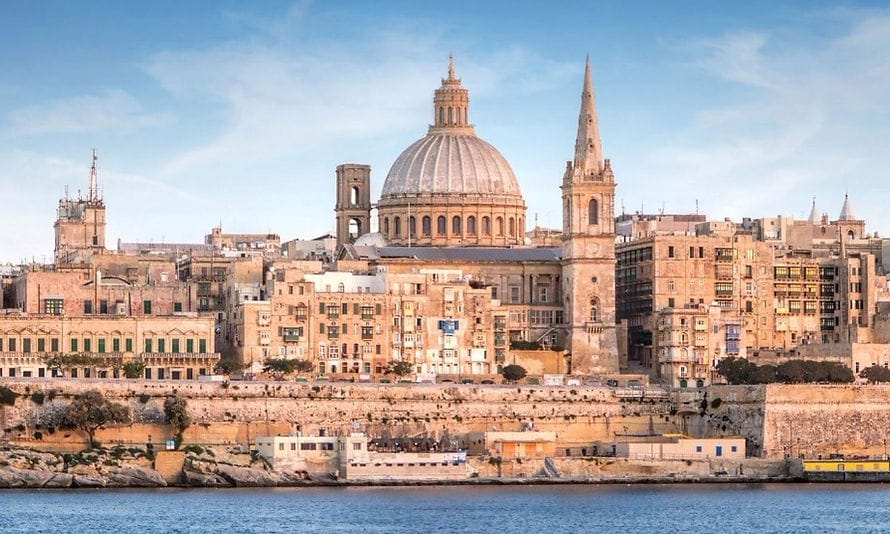
MRVP is an accredited agent that guides non-EU nationals through the Malta Residence and Visa Programme, a residency-by-investment route that lets a family settle in Malta and travel across the Schengen area. The agent's office is on Manuel Dimech Street in Sliema, the busy seafront town facing Valletta, and the work covers everything from the first eligibility check to the final residence card.
This is a specialist service rather than a general immigration practice, so it suits people who already know they want residency through investment rather than citizenship. It is listed in our directory of immigration consultants in Malta, and our guide to relocating to Malta from the UK explains what the move involves in daily life. Since Brexit, UK passport holders count as third-country nationals, which is the group the programme is built for.
What the programme gives you
The programme is aimed at non-EU residents who want to live in, settle in or stay permanently in Malta. The residence certificate does not expire so long as the conditions are met, and the residence card is valid for five years and can be renewed. There is no minimum length of stay in Malta, and no language test for the main applicant or dependants.
Residents can travel in the Schengen area for up to 90 days in any 180, always with a valid travel document. The programme does not give employment rights in other Schengen countries, and it does not give an automatic licence to work in Malta: a work permit or a business application still has to follow the normal procedures. If you plan to work from the island remotely, our digital nomad guide to Malta sets out other options.
Costs and qualifying investments
The headline requirements are listed plainly. The administration fee is €30,000, which covers the main applicant, a spouse and children who are unmarried and not economically active. Parents, parents-in-law and grandparents can be added for €5,000 each. A card processing fee of €27.50 per person per year applies, so a five-year card costs €137.50 per person. Legal fees are quoted separately, and the agent advertises competitive rates.
The qualifying investment is Maltese government stock or a fund investing only in Maltese government stock, worth €250,000 and held for five years. After that period the stock can be sold without losing residency. The applicant also needs a qualifying property: a rental of at least €10,000 for five years or a purchase of at least €270,000. Higher minimums, €320,000 for a purchase or €12,000 a year for a rental, apply in some locations. A health insurance policy covering the whole family is required too.
On top of this, the main applicant must show assets of €500,000 or an annual income of €100,000 arising outside Malta. These amounts apply to the main applicant alone, and do not change with the number of dependants. Programme terms can change, so ask for the current requirements when you enquire. Our Malta tax guide for UK nationals is useful background for the tax side, and the programme itself carries no tax incentives.
Property, bonds and day-to-day rules
Property rules are a large part of the questions people ask. The applicant does not have to own or lease a property when applying, but must do so after the letter of approval in principle is issued, although a property arranged earlier is fine if it meets the rules. The home must be residential, so hotel rooms do not qualify. It can be swapped for another qualifying property within the first five years, a loan is possible at the bank's discretion, and a non-EU buyer outside a special designated area still needs a permit to acquire property. Anyone moving to the island may enjoy browsing our Valletta guide and things to do in Malta before choosing a base.
Evidence of wealth is flexible. A three-month bank statement of the main account is enough for source of funds, and investment portfolios, company accounts or an architect's valuation of property are accepted when issued by a reputable body. A benefactor can support the asset requirement, provided funds are transferred to the main applicant with a deed of gift or sworn declaration and proof of the bank transfer.
How the application runs
The agent files the application with the Maltese residency agency and pays the initial €5,500 fee. Due diligence checks follow on the main applicant and every dependant, and if the board approves, a letter of approval in principle is issued, roughly four months in. The applicant then has three months to buy or lease the property, buy the stock and take out health cover. Final approval invites the family to Malta for biometrics, though capture abroad is possible at the agency's discretion, and children under six are exempt.
Dependants include a spouse, unmarried children who are not economically active, and non-working parents or grandparents who depend on the main applicant, with no age limit. A divorce ends the spouse's residency rights. Household staff cannot be included. For wider planning, see CLA Malta for company and tax services and our overview of financial services in Malta.
Cards, renewals and compliance
The residence certificate has no expiry date as long as the programme conditions continue to be met, while the card is initially valid for five years and renewable. Three sets of biometric data are captured for each applicant, and the spare sets are used for renewals, but a change of address, a lost card or a technical problem may mean coming back to Malta to give fingerprints again. The card cannot currently be renewed at a Maltese embassy abroad.
Children's cards follow their own timetable: a card issued to a minor under 14 expires one month after the fourteenth birthday, and the same applies when a dependant turns 18. Children who reach 18 do not lose their residence status. After the first five years the beneficiary no longer has to keep the investment or the property, but a suitable residential address must be supplied so the card can be reissued, and an official compliance form is submitted every five years.
Selling the stock or giving up the property inside the first five years ends the programme, and dependants who hold rights through the same certificate lose theirs. It pays to settle your five-year plan before committing, and the agent can introduce a local tax consultant for tax questions.
Changing programme or circumstances
The administration fee is non-refundable and cannot be transferred, so a beneficiary who later switches to the Malta Individual Investor Programme does not get the €30,000 deducted from that scheme's fees. A client who holds an 18-month card under the investor programme but has not yet applied for citizenship can move over to this programme, as long as the full process is followed. Dependants can also be added later, with the same €5,000 charge for parents and grandparents.
Where a client is an EU national and the partner is not, the partner may apply as main applicant with the EU national acting as benefactor, since the legislation does not stop it. An adult dependant must be economically inactive when the application is filed, and may look for work afterwards. These details matter at the planning stage, so mention your family situation in your enquiry.
Living in Malta as a resident
Residents with a work permit can send children to state primary and secondary schools free of charge, but without one the programme gives no free education. After five continuous years of residence, a foreigner may apply for citizenship by naturalisation, subject to the presence, language and conduct rules. For a first look at the islands, about Malta and our Malta weather guide cover the basics.
To start, use the VisitMalta.co.uk enquiry form on this page and we will pass your message to the MRVP agent.
Questions about MRVP
What is the Malta Residence and Visa Programme?
It is a residency-by-investment route for non-EU nationals. It requires an administration fee, a government stock investment, a qualifying property and health insurance, and it leads to a residence certificate and a five-year renewable card.
Who is eligible to apply?
Third-country nationals can apply, except nationals of Afghanistan and North Korea. EEA and Swiss nationals are excluded. A UK passport holder falls within the eligible group, subject to due diligence checks.
How much does the programme cost?
The administration fee is €30,000, with €5,000 for each parent, parent-in-law or grandparent. You also need €250,000 in government stock, qualifying property, health cover and legal fees quoted separately.
What property is required?
You need a residential rental of at least €10,000 for five years, or a purchase from €270,000. Higher minimums of €12,000 a year or €320,000 apply in some areas, and hotel rooms do not count.
How long does it take?
The agent quotes about four months from application to the letter of approval in principle. After that the applicant has three months to complete the property, investment and insurance steps before final approval.
Do I have to live in Malta?
No. There is no minimum stay requirement. You must keep the conditions in place and provide a suitable residential address, and you can travel in the Schengen area for up to 90 days in any 180.
Does residency let me work in Malta?
No automatic right to work comes with the programme. You need to apply for a work permit through the normal channels, or apply to set up a business under prevailing law.
Where is the office and how do I get in touch?
The office is on Manuel Dimech Street in Sliema, Malta. Use the VisitMalta.co.uk enquiry form on this page and we will pass your message to the accredited agent.
Practical information
The office is at 43 Apartment 10, Manuel Dimech Street, Sliema, Malta. No opening hours are published. The agent can be reached through the contact form on its own site, and VisitMalta.co.uk offers its own enquiry form on this page: send your nationality, family members to include and your timeline, and we will pass your message to the agent.
Location
Other immigration consultants in malta to compare
Listed under
The details on this page were correct on 25 October 2026, as published on the MRVP website. Services, prices and hours can change, so please confirm when you enquire.