MALTA'S SILENT CITY
Mdina
A medieval walled city of 300 residents, 204 metres above Malta — former capital, permanent silence
FOUNDED
9th century AD
POPULATION
~300
ALTITUDE
204m
DISTANCE FROM VALLETTA
13km
The City That Stopped
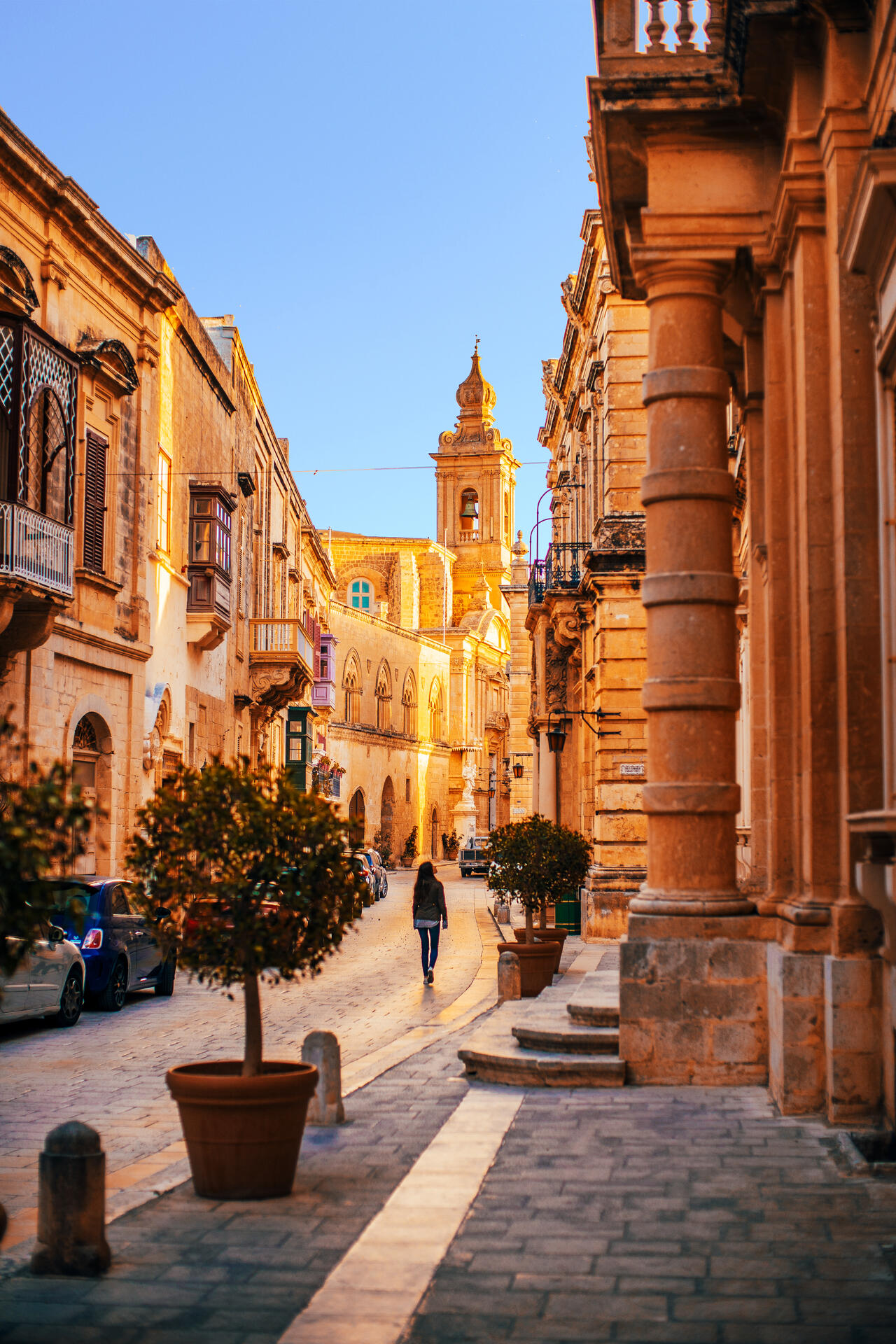
Mdina, the Silent City, stands as a unique enclave of history and tranquility in the Mediterranean, a walled medieval city perched 204 metres above sea level on just 0.36 square kilometres of land. Once the capital of Malta until 1530 when the Knights Hospitaller established themselves in Birgu, this ancient settlement has been home to approximately 300 permanent residents who maintain the city's timeless atmosphere. Founded by the Arabs in the 9th century on the ruins of a Roman settlement, Mdina derives its name from the Arabic word "medina," meaning simply "the city," a testament to its profound Arab influence that shaped its narrow streets and defensive architecture. Unlike anywhere else in the Mediterranean, Mdina offers an experience that transcends tourism, creating a palpable sense of entering a different temporal dimension where the modern world recedes behind ancient stone walls. The city's isolation, both physical and psychological, stems from its elevated position, complete fortifications, and deliberate preservation as a living museum rather than a commercialised attraction.
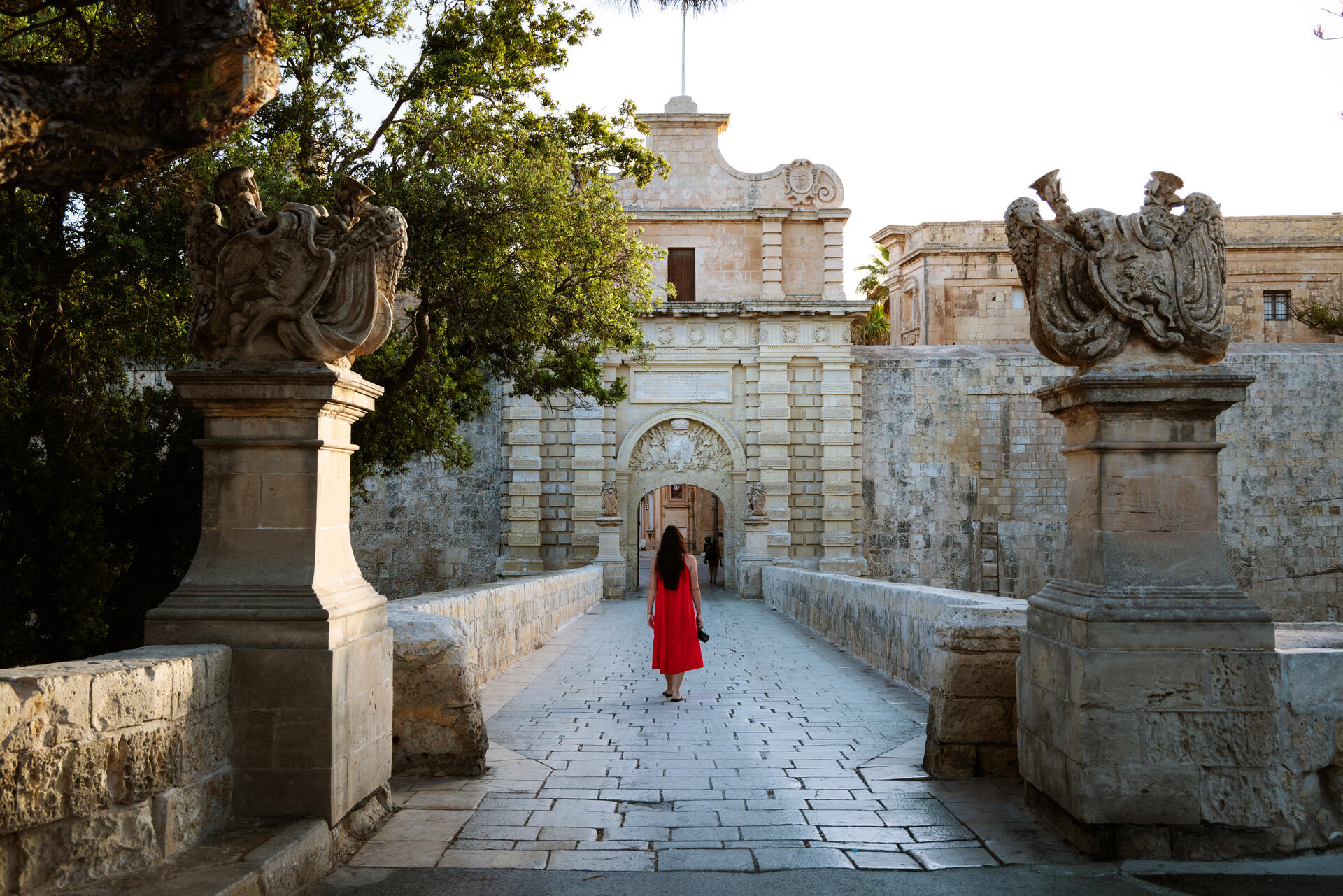
The journey to Mdina begins with the ceremonial passage through its main gate, an imposing structure constructed in 1724 by Grand Master Manoel de Vilhena that serves as the threshold between contemporary Malta and its medieval heart. Where once a protective moat surrounded the city's bastions, today a dry ditch garden offers a peaceful green space that frames the approach without obstructing the view. From the bastions, one can gaze across thirteen kilometres to the unmistakable silhouette of Valletta, the modern capital, creating a visual connection between Malta's historical seats of power across the centuries. There exists a profound sensation of leaving the modern world behind as you pass through the gate, the sounds of traffic replaced by the soft echo of footsteps on ancient stone and the occasional call of birds overhead. For those fortunate enough to arrive at 7am, before the tour buses disgorge their passengers, Mdina reveals its most authentic self — quiet, contemplative, and resplendent in the early morning light as the first rays illuminate the honey-coloured limestone buildings.
For those fortunate enough to arrive at 7am, before the tour buses disgorge their passengers, Mdina reveals its most authentic self — quiet, contemplative, and resplendent in the early morning light.
What to See in Mdina
The Mdina Cathedral, dominating the city skyline with its imposing Baroque facade, represents both spiritual and architectural significance, constructed between 1697 and 1702 on the very site where a Norman cathedral had stood until its destruction in the 1693 earthquake. Visitors pay a modest entry fee of five euros to enter this sacred space, which houses breathtaking works by Mattia Preti, whose dramatic paintings draw the eye with raw, considered authority. The cathedral's silver gate, crafted in intricate detail, depicts scenes from the life of Saint Paul, the island's patron apostle, whose shipwreck on Maltese shores in 60 AD established the earliest thread of this city's Christian narrative. Adjacent to the main cathedral, the Cathedral Museum houses an extraordinary collection including rare Albrecht Dürer woodcuts and Francisco Goya engravings, requiring a separate five-euro admission but offering an additional layer of cultural depth that most visitors do not anticipate finding in so small a city. To truly appreciate both the cathedral and its museum requires a minimum of two hours, not the twenty minutes many visitors allocate, allowing time to absorb the spiritual atmosphere, examine the artworks closely, and understand the historical continuity this site has maintained across three centuries.
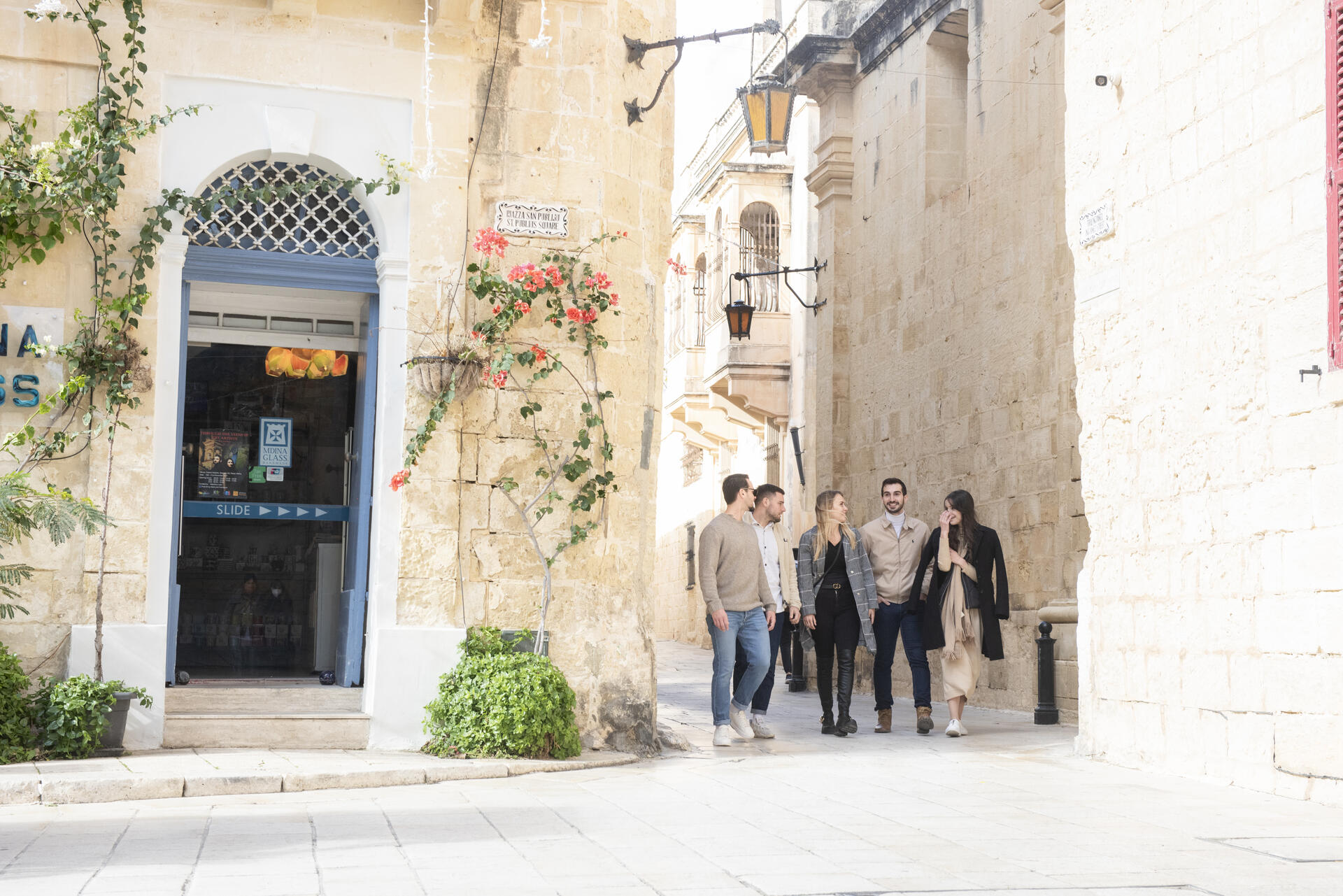
Wandering through Mdina's streets reveals a carefully preserved medieval urban plan where the main artery, Villegaignon Street, serves as the city's spine, lined with palazzos and residences that speak of centuries of noble occupation and aristocratic withdrawal from the pressures of harbour commerce. Among these architectural treasures stands Palazzo Falson, dating to 1495 and recognised as the best preserved medieval palazzo in all of Malta, welcoming visitors for a ten-euro entry fee to explore its extraordinary collection of arms, manuscripts, and silver assembled over generations of continuous ownership. Bastion Square offers one of the most expansive viewpoints in the entire Maltese archipelago, looking northwest across the island's interior countryside toward the sea, where on clear days the horizon dissolves into Mediterranean haze and the distance between centuries seems to collapse. Throughout Mdina, the complete absence of cars creates an atmosphere of profound quiet, with the only sounds being human voices, birdsong, and the occasional measured rhythm of a horse-drawn carriage navigating the narrow passages that were never designed for anything else. The city's layout, with its winding streets and occasional deliberate dead ends built to confuse invaders, encourages exploration at a pace that modern travel rarely permits.
No visit to Mdina is complete without experiencing Fontanella Tea Garden, perched atop the city's bastions and renowned for its exceptional cakes — the chocolate and lemon varieties in particular have acquired a reputation that precedes the café by decades, drawing visitors who have heard about them before they have even booked their flights. This establishment opens at 10am, offering a mid-morning respite after exploring the cathedral and surrounding streets, with its terrace providing one of the most commanding views across the Maltese countryside that any café table in Europe can claim. Almost every visitor to Mdina finds their way here at some point during their stay, drawn by the combination of quality and vantage point, and it functions as an unofficial gathering point where travellers from different directions compare notes on what they have seen. There exists a revealing contrast between the café's pleasant tourist atmosphere and the silence just fifty metres away in the city's empty streets, where a person can stand alone in a medieval lane and hear only their own breathing. This juxtaposition highlights Mdina's remarkable quality: it accommodates both the contemporary visitor seeking cake and view, and the empty city waiting patiently beyond the terrace, unchanged and unhurried.
Getting to Mdina
From Valletta
Bus 51 or 52, 45 minutes, €2, departing from Valletta Bus Terminus. KM Malta Airlines operates direct flights from London Heathrow and Gatwick, flight time approximately 3 hours.
From Sliema
Bus 51 via Valletta, allow 60 minutes total.
From Airport
Bus to Valletta then 51/52, approximately 75 minutes total. Taxi from Malta International Airport approximately 35 minutes direct.
Parking
Rabat car park, 10-minute walk to Mdina gate. No private vehicles permitted inside Mdina's walls.
VALLETTA
13km · 45 mins by bus
MALTA AIRPORT
15km · ~35 mins by car
SLIEMA
14km · 60 mins by bus
MDINA GATE
10 mins walk from Rabat parking
FONTANELLA
Bastion walls · 5 mins from gate
RABAT
Immediately outside walls
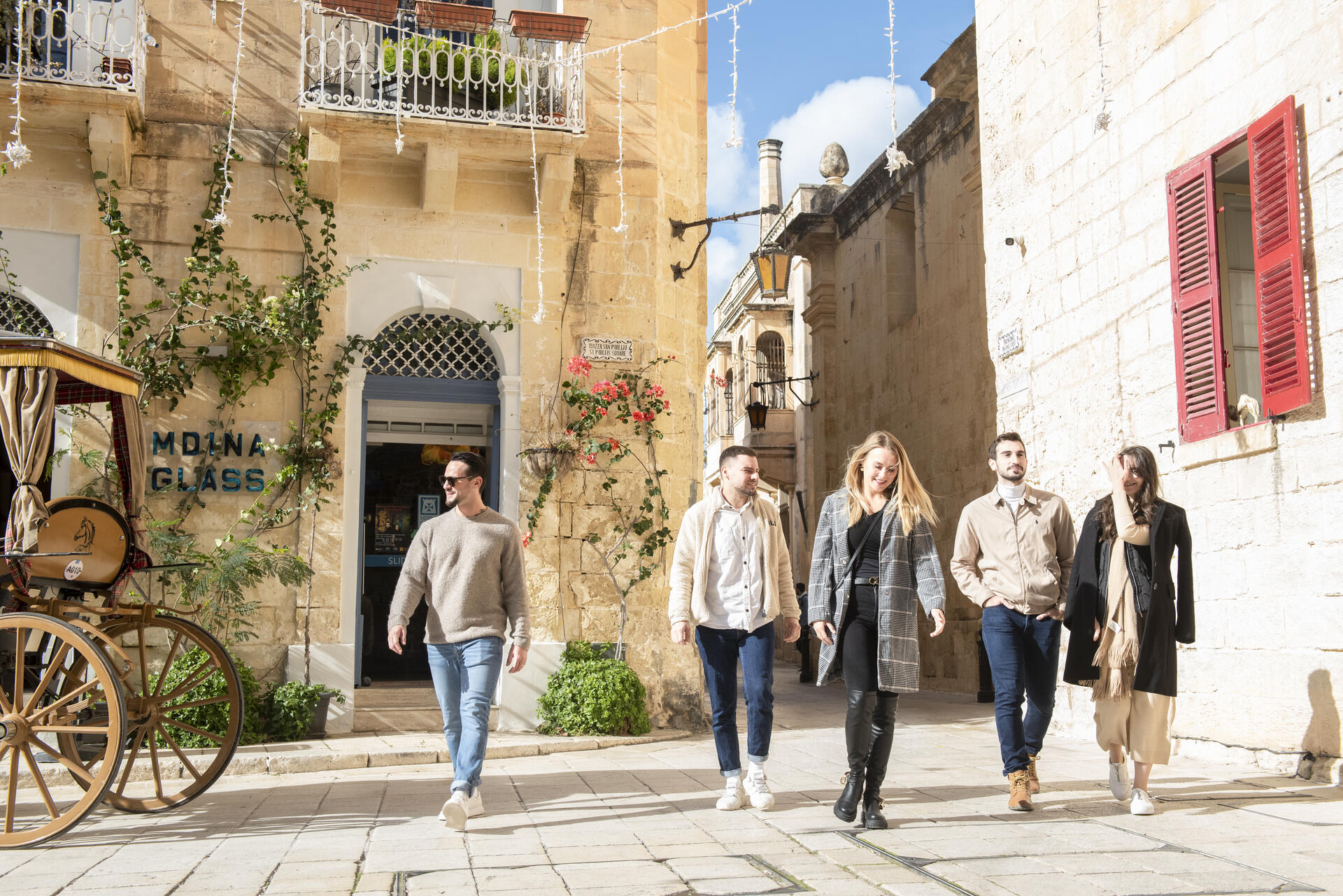
Beyond Mdina's walls lies Rabat, a town of approximately 15,000 residents that forms the natural extension of the Silent City's historical narrative and is visited by far fewer tourists in proportion to the depth of what it contains. St Paul's Catacombs, open for a six-euro entry fee, preserve 2,400 graves dating from the 4th to the 7th centuries, arranged across interconnected underground chambers that reveal the island's early Christian burial practices with a completeness found nowhere else in this part of the Mediterranean. Nearby, St Agatha's Catacombs provide additional evidence of how thoroughly the early Christian community shaped this hilltop, while the Parish Church of St Paul stands as a working reminder that this is a living town with its own civic life quite separate from the museum piece next door. The Wignacourt Museum, housed in the former residence of Grand Master Alof de Wignacourt and incorporating some of the earliest surviving structures in the area, offers context that makes both Rabat and Mdina legible as parts of a single continuous story rather than isolated attractions. Despite being immediately outside Mdina's walls — in many cases within five minutes' walk — Rabat is visited thoroughly by only a fraction of those who enter the Silent City, which means its catacombs and churches retain a quietness that Mdina itself can only achieve before nine in the morning.
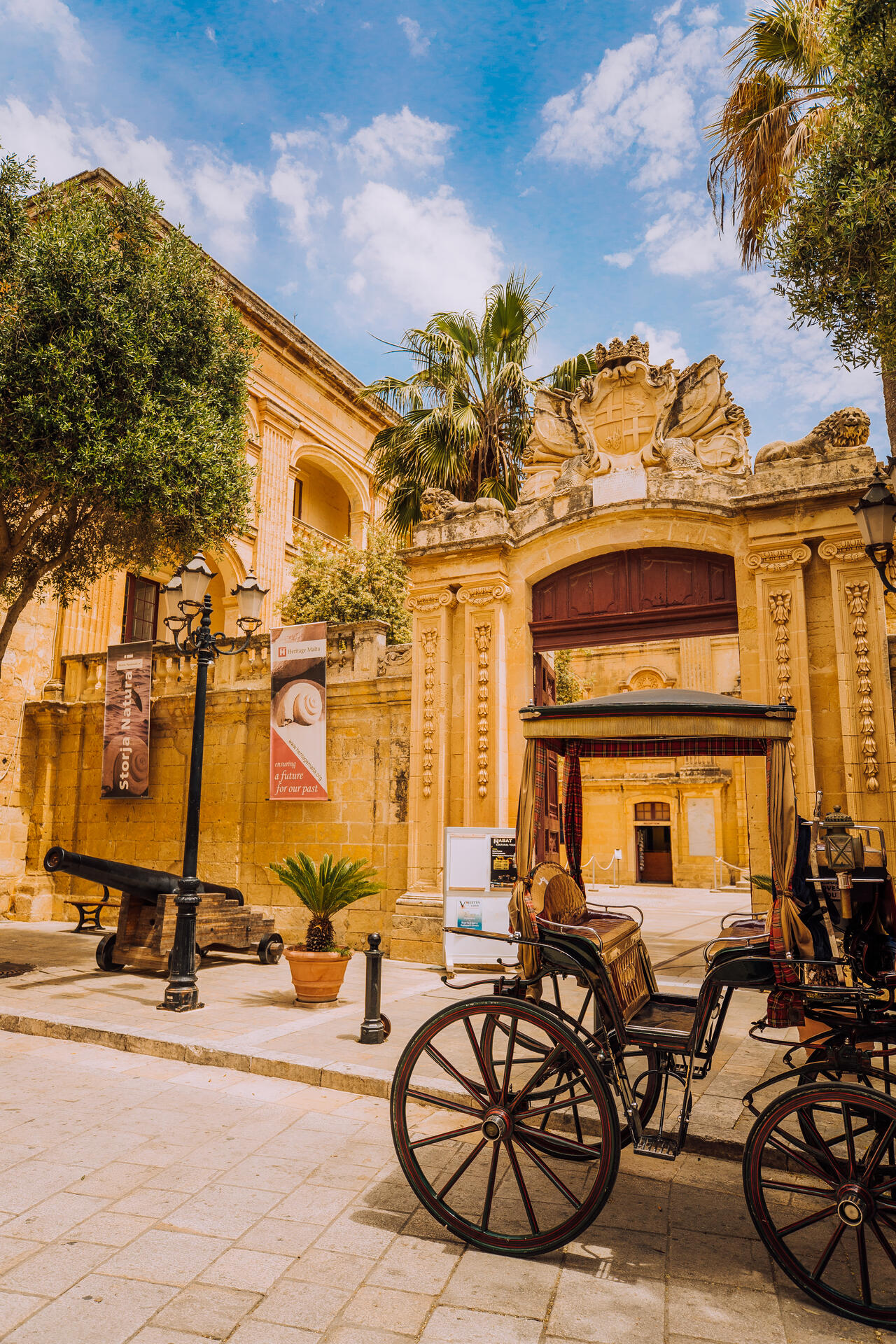
The karozzin, Malta's traditional horse-drawn carriage, offers a mode of transport through Mdina and Rabat that is simultaneously practical and historical, with a standard 30-minute tour costing approximately thirty-five to forty-five euros for up to four passengers — a price that divides into manageable proportions when shared. The ongoing discussion surrounding animal welfare versus cultural tradition has led to careful regulation of the karozzin industry, with horses subject to veterinary oversight and regulated working hours, and operators generally aware that their livelihood depends on managing this question with visible care. Practically speaking, the narrow streets of Mdina — some little wider than the carriage itself — make motorised vehicles impossible anyway, and the karozzin is not so much a nostalgic choice as the most efficient way to cover ground between sites when time is limited. The route typically takes in Bastion Square, the full length of Villegaignon Street, and the boundary between Mdina and Rabat, with the driver providing commentary that fills in details no signage manages to convey about who lived where and why these particular stones matter. The rhythmic sound of hooves on limestone, the scent of leather and horse, and the slower pace combine to create a connection to the city's past that walking alone, however pleasurable, does not fully replicate.
For those seeking Mdina at its most revealing, timing the visit is the single most important decision — arriving before nine in the morning or after four in the afternoon allows the city to disclose itself without the compression of tour groups that can fill its narrow lanes from mid-morning through mid-afternoon. The ideal seasons are April through May and October through November, when temperatures average between eighteen and twenty-four degrees and outdoor exploration is comfortable across a full day without the intensity of a Maltese summer bearing down on exposed limestone streets. During summer, however, Mdina after 8pm undergoes a complete transformation: the tour buses have long departed, the city is illuminated by lantern light, the few restaurants that remain open fill with people who have made the deliberate choice to stay, and the atmosphere shifts from visited monument to inhabited city in a way the daytime crowds never allow. Getting here from Valletta requires Bus 51 or Bus 52 from the Valletta Bus Terminus, a forty-five minute journey costing two euros — one of the more agreeable public transport rides in Malta, crossing the island's central plateau with views that keep changing as the elevation rises. Those arriving by car will find parking in Rabat, ten minutes' walk from Mdina's gate, and after visiting both cities should consider eating in Rabat itself, where traditional restaurants serve stuffat tal-fenek (rabbit stew) and pastizzi at prices that reflect a town cooking for its own residents rather than for transient visitors.
Where to Stay near Mdina
Xara Palace Relais & Châteaux (5-star, from £280/night) is the only hotel inside Mdina's walls — 17 rooms in a 17th-century palazzo, rooftop restaurant with the most commanding view in Malta, and the singular distinction of being a five-star property within a living medieval city. For budget-conscious travellers who want to be walking distance from the gate at dawn, before any tour bus arrives, Point de Vue Guesthouse in Rabat (from £65/night) places you immediately outside the walls at a price that reflects a town rather than a monument.
Frequently Asked Questions — Mdina Malta
Frequently Asked Questions
Is Mdina worth visiting?
Mdina is one of the most completely preserved medieval walled cities in Europe, covering 0.36 square kilometres with a permanent population of approximately 300 residents and no private motor traffic permitted within the walls. The city contains a Baroque cathedral built 1697–1702, the Palazzo Falson (1495, the best preserved medieval palazzo in Malta), and bastion views across the Maltese landscape to Valletta 13km away. Entry to the city itself is free; the cathedral costs €5, Palazzo Falson €10, the Cathedral Museum €5 separately. A single morning covers the principal sights; extending into the afternoon allows time to cross into Rabat and visit St Paul's Catacombs.
How do I get to Mdina from Valletta?
Bus 51 and Bus 52 run from Valletta Bus Terminus directly to Rabat, the town immediately outside Mdina's walls. The journey takes approximately 45 minutes and costs €2. From the Rabat bus stop, Mdina's main gate is a 10-minute walk. By car the distance is 13km, approximately 20 minutes; parking is available in Rabat and is not permitted within Mdina's walls. From Sliema or St Julian's, take Bus 51 via Valletta, allowing approximately 60 minutes total.
How long do you need in Mdina?
Allow a minimum of two hours for Mdina itself — one hour to walk the streets and bastions, one hour for the cathedral and Cathedral Museum. Add 30 minutes for Fontanella Tea Garden on the bastion walls. If visiting Palazzo Falson (€10, allow 45 minutes) and crossing into Rabat for St Paul's Catacombs (€6, allow 45 minutes), a half-day of four to five hours is realistic. Arriving before 9am or staying after 4pm avoids the peak tour group period and transforms the experience.
Can you stay overnight in Mdina?
The only hotel within Mdina's walls is the Xara Palace Relais & Châteaux, a 17-room property in a 17th-century palazzo with rates from approximately £280 per night. It is one of very few hotels in Europe situated within a living medieval walled city. For budget-conscious visitors, Point de Vue Guesthouse in Rabat immediately outside the walls offers rooms from approximately £65 per night with walking distance access to Mdina's gate at dawn before the day visitors arrive.
What is the best time to visit Mdina?
Arrive before 9am or after 4pm to avoid tour groups. April–May and October–November offer the best temperatures (18–24°C) for extended walking. In summer, Mdina after 8pm is one of the most atmospheric experiences in Malta — the crowds have gone, the city is lit by lanterns, and the population of 300 residents reclaims their streets. The city is accessible late into the evening and the contrast with the daytime visit is so complete that it is worth planning for.
FLY DIRECT FROM LONDON
Visit Mdina with KM Malta Airlines
KM Malta Airlines flies direct to Malta from London Heathrow and London Gatwick, approximately 3 hours. Mdina is 13km from Valletta, 45 minutes on Bus 51 or 52.
Best months for Mdina: April–May and October–November, 18–24°C. Summer evenings after 8pm — the city transforms completely once the tour groups have gone.
Search Malta Holiday Packages