Lead acid banks
Sulfation diagnosis and correct charge voltage restoration.
Marine electrical engineering
Battery and charging system diagnosis, testing and installation for yachts, superyachts and commercial vessels in Malta, covering lead acid and lithium banks.
Lead Acid and Lithium
Chemistry specific diagnosis and charging
V, 24V and 48V
Voltage matched charger and bank service
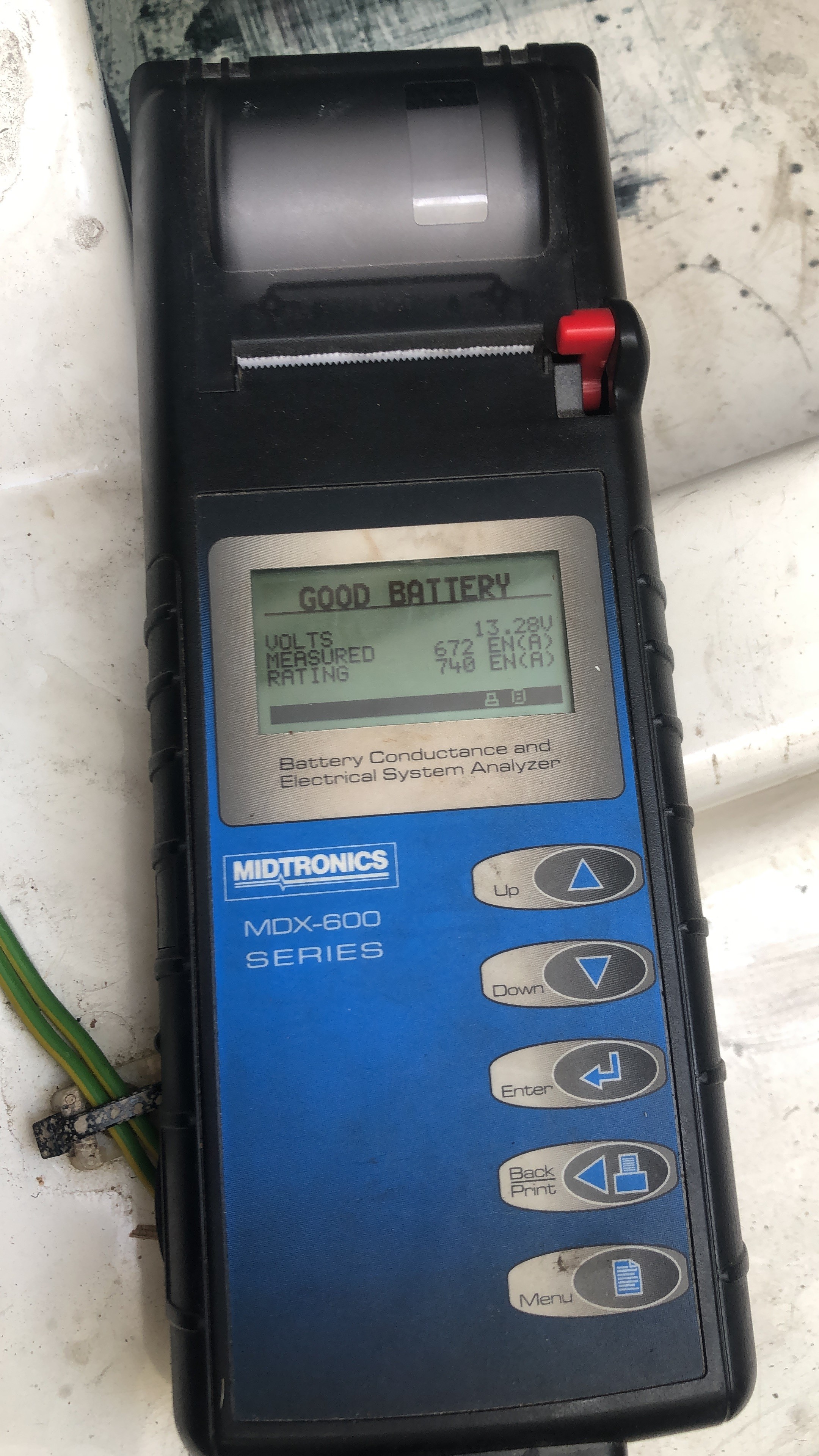
Battery Testing
Condition and capacity verification
Starting and House Banks
Separate bank charging profiles
Battery and charging system faults are among the most common electrical issues on any vessel, and correctly diagnosing them depends on understanding both the battery chemistry involved and how the charging source is matched to it. Electrical Marine Services tests, diagnoses and repairs battery and charging systems for yachts, superyachts and commercial vessels in Malta, covering both traditional lead acid banks and the lithium systems increasingly fitted on newer vessels.
Lead acid batteries fail primarily through sulfation, a process where lead sulfate deposits harden on the battery plates if the battery is left in a partial state of discharge for even a few days. A twelve volt lead acid battery needs to reach approximately 14.2 to 14.4 volts DC to be considered fully charged, with these figures doubling for a twenty four volt bank, and undercharging over time causes a battery to lose effective capacity even though it may still accept some charge. Lithium marine batteries behave differently: their battery management system disconnects the bank at a safe voltage to protect the cells, and if a charger appears to stop delivering current at that point, this is the lithium protection system working correctly rather than a fault to be forced past.
Correct charger sizing and voltage matching is central to reliable battery service. A charging source must match the bank voltage exactly, since a twelve volt charger will not charge a twenty four volt bank at all and may damage the charger in the attempt, while an appropriately sized charger is generally specified at somewhere between ten and twenty five percent of the bank's amp hour capacity. Vessels running separate starting and house banks, or mixing lead acid and lithium chemistries across different banks, need chargers capable of delivering the correct profile to each bank independently rather than a single output shared across incompatible battery types.
Diagnostic work covers testing each charging source independently at the battery terminals, verifying that voltage rises correctly under charge, checking for corrosion or loose terminal connections that create resistance and heat, and confirming that alternator, shore power charger and any DC to DC charging between banks are all functioning to specification. Terminal connections and electrolyte levels on flooded batteries are checked as part of routine maintenance, since a battery that quickly falls below rest voltage after charging or shows resistance at the terminals is often flagging a connection fault rather than a failed cell.
Battery and charging faults are frequently connected to wider electrical issues on a vessel, and diagnosis often extends into the broader marine electrical fault-finding service where a charging problem turns out to originate in wiring, a failed alternator, or a fault in the vessel's generator and alternator system supplying shore or engine driven charging. Attendance for battery and charging work is available across Malta's marinas, at Valletta, Marsaxlokk and Malta Freeport, and at OPL when operationally required.
Real project work
How it works
Vessel details, equipment information, drawings, fault history and photographs reviewed before attendance.
Structured testing and hands on experience identify the fault and realistic repair options.
The responsible superintendent, manager or engineer is kept informed with clear findings and next steps.
Coverage
Sulfation diagnosis and correct charge voltage restoration.
BMS aware diagnosis that respects battery protection behaviour.
Voltage and amp hour matched charger specification and fitting.
Independent charging profiles for separated battery banks.
Speak with Electrical Marine Services
Send the vessel name, location or ETA, equipment details, fault description and available photos. Electrical Marine Services will review your enquiry and respond directly with next steps.
Attendance is coordinated alongside, during Malta port calls, or at Malta Offshore Anchorage when operationally required, subject to access and scheduling.