MOSTA, MALTA · EARLY CHRISTIAN CATACOMBS
Ta' Bistra Catacombs
Fifty-seven tombs, a farmhouse built on top and a road that nearly buried them for good
AGE
c. 1,700 yrs
TOMBS
57
CHAMBERS
16
ADULT TICKET
€5
IN SHORT
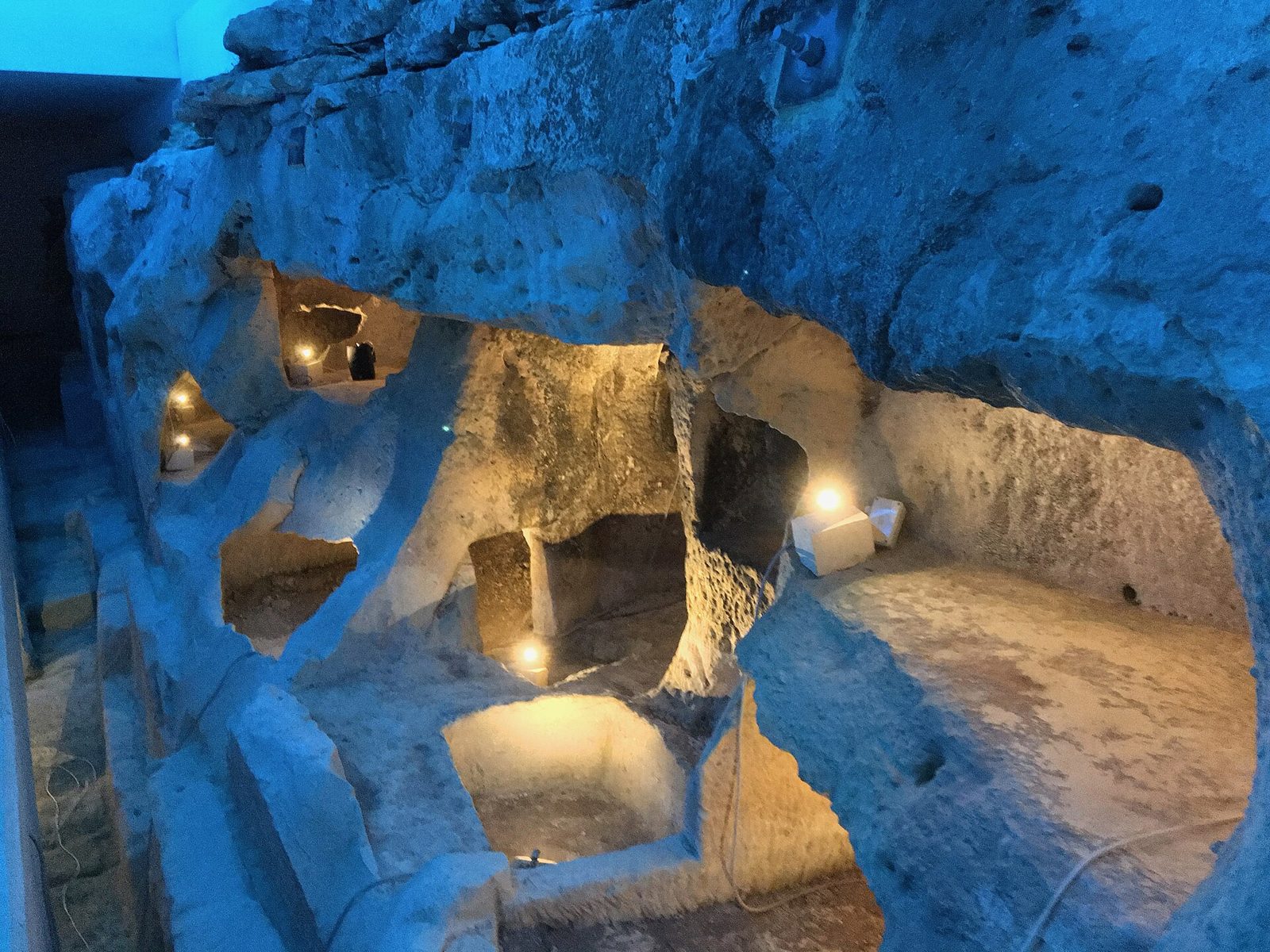
Ta' Bistra Catacombs is an early Christian burial site in Mosta, in the centre-north of Malta, run by Heritage Malta. It is the largest group of tombs and catacombs found outside the ancient Roman city of Melite (today's Mdina and Rabat): around 57 tombs in 16 chambers, cut into the rock over roughly 90 metres. It currently opens to the public on the last Sunday of each month, with tickets at €5 for adults bought at the door.
TA' BISTRA, MOSTA
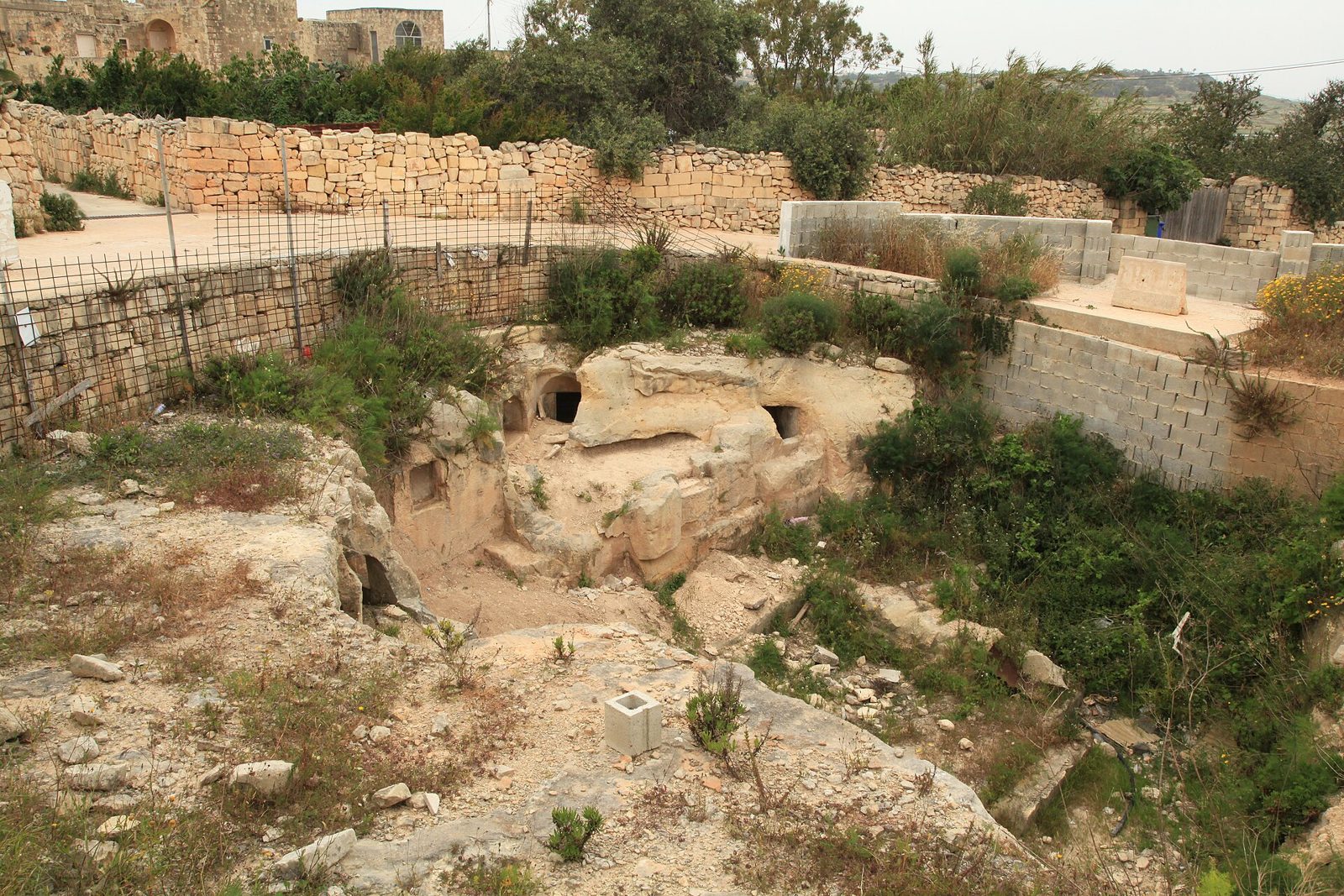
Most visitors to Malta who want to see catacombs head straight for Rabat, where St Paul's and St Agatha's draw the crowds. Ta' Bistra, on the northern edge of Mosta, is the one to see if you want the same story told somewhere quieter. Heritage Malta describes it as lying halfway between the ancient town of Melite and the once-important harbour of Salina, and as the largest set of tombs and catacombs found beyond the confines of the ancient city. That position matters: it tells you there was a rural community living and farming out here in late Roman times, burying its dead close to home rather than carrying them to the city.
The site is commonly described as about 90 metres long, with 57 tombs laid out across 16 chambers cut into Malta's soft globigerina limestone. Most sources date its main use to around the 4th century AD, the period when Christianity was taking hold across the Roman world, although some earlier studies place the first burials as far back as the 1st century AD. As in the Rabat complexes, you will find the typical features of early Christian burial in Malta, including the circular agape tables where families are thought to have shared a commemorative meal in honour of the dead.
The Catacomb That Survived a Road
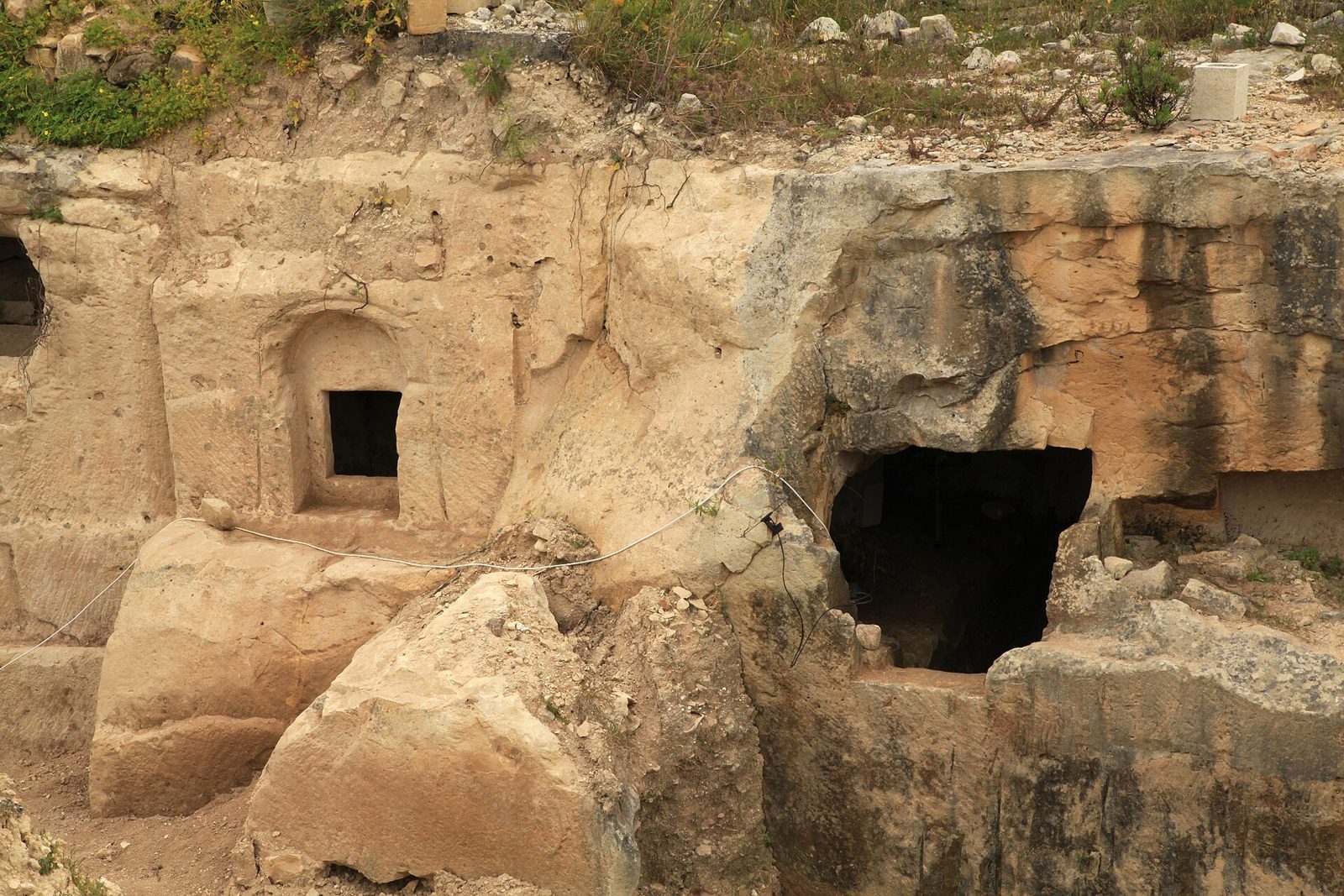
What makes Ta' Bistra unusual is how close it came to disappearing. The catacombs were first recorded in the late 1800s, but nobody studied them properly until 1933, when Captain Charles Zammit, son of Sir Themistocles Zammit, the archaeologist behind the Ħal Saflieni Hypogeum and the Tarxien Temples, investigated them ahead of a new road leading down to Burmarrad. Part of the site was then covered over by that road and was widely assumed to have been destroyed. It was only when road works in 2004 were monitored by archaeologists that the tombs were found to have survived beneath the tarmac.
Above ground, the land kept being used. A traditional Maltese farmhouse was built over part of the catacombs, causing some damage to the chambers below, and some of the tombs were used as animal pens. During the Second World War, when Malta became one of the most heavily bombed places on earth, local families used the catacombs as an air raid shelter. Layer by layer, the site records almost two thousand years of Maltese life, from late Roman funerals to wartime survival.
c. 4th century AD
Main period of use as a burial ground for a rural community between Melite and Salina.
Late 1800s
The catacombs are first recorded.
1933
Captain Charles Zammit investigates the site ahead of a new road to Burmarrad; part is covered over.
1940s
Local families use the tombs as an air raid shelter during the Second World War.
2004
Archaeological monitoring of road works shows the tombs under the road survived.
2013 and 2014
Further studies bring new discoveries and interpretations.
2019
Heritage Malta's Niftakar Ta' Bistra collects local memories of the site.
Late Roman tombs, a farmhouse built on top of them, animal pens, a wartime shelter and a road that nearly buried it for good: Ta' Bistra tells two thousand years of Maltese life in one small site.
From Animal Pen to Heritage Site
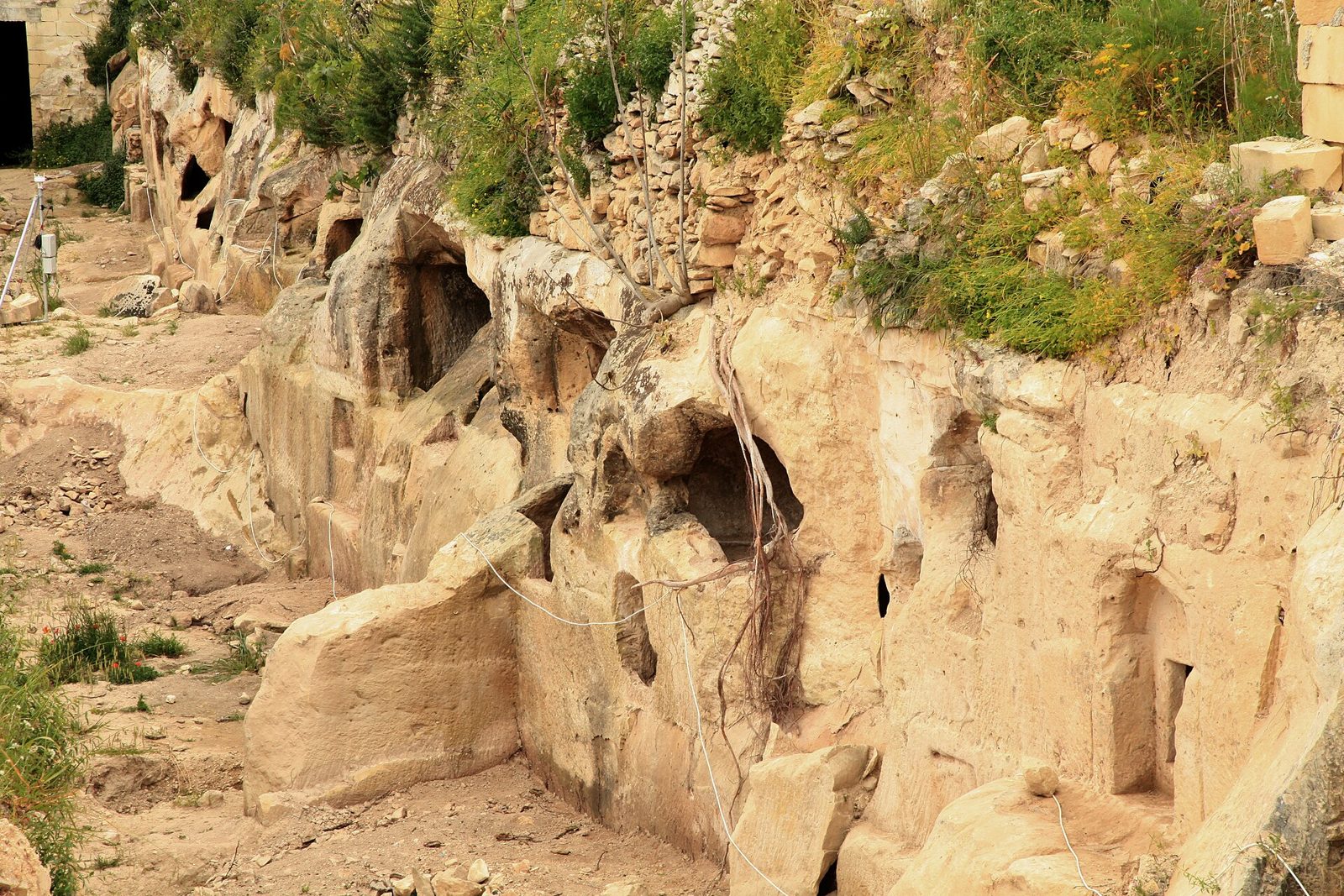
Bringing Ta' Bistra back to life took three separate EU-funded projects. The first, Cultexchange, carried out the main structural work on the farmhouse above the tombs and turned it into a small visitor orientation centre. The second, Archaeotur, a joint project with sites in Ragusa in Sicily, finished Section A of the catacombs along with the farmhouse and visitor facilities. The third, known as REBACA, paired Ta' Bistra with the Roman Baths at Għajn Tuffieħa: it funded new studies, conservation work and the protective shelter that now covers most of the site. Further archaeological studies in 2004, 2013 and 2014 brought new discoveries and new interpretations.
In 2019 Heritage Malta ran Niftakar Ta' Bistra (Maltese for "I remember Ta' Bistra"), an event that invited anyone with memories, photographs or objects connected to the catacombs and the surrounding countryside to come forward and share them. It is a good example of how the site is presented today: not just as a set of ancient tombs, but as a place that local people lived around, farmed over and sheltered in.
What a Visit Is Like
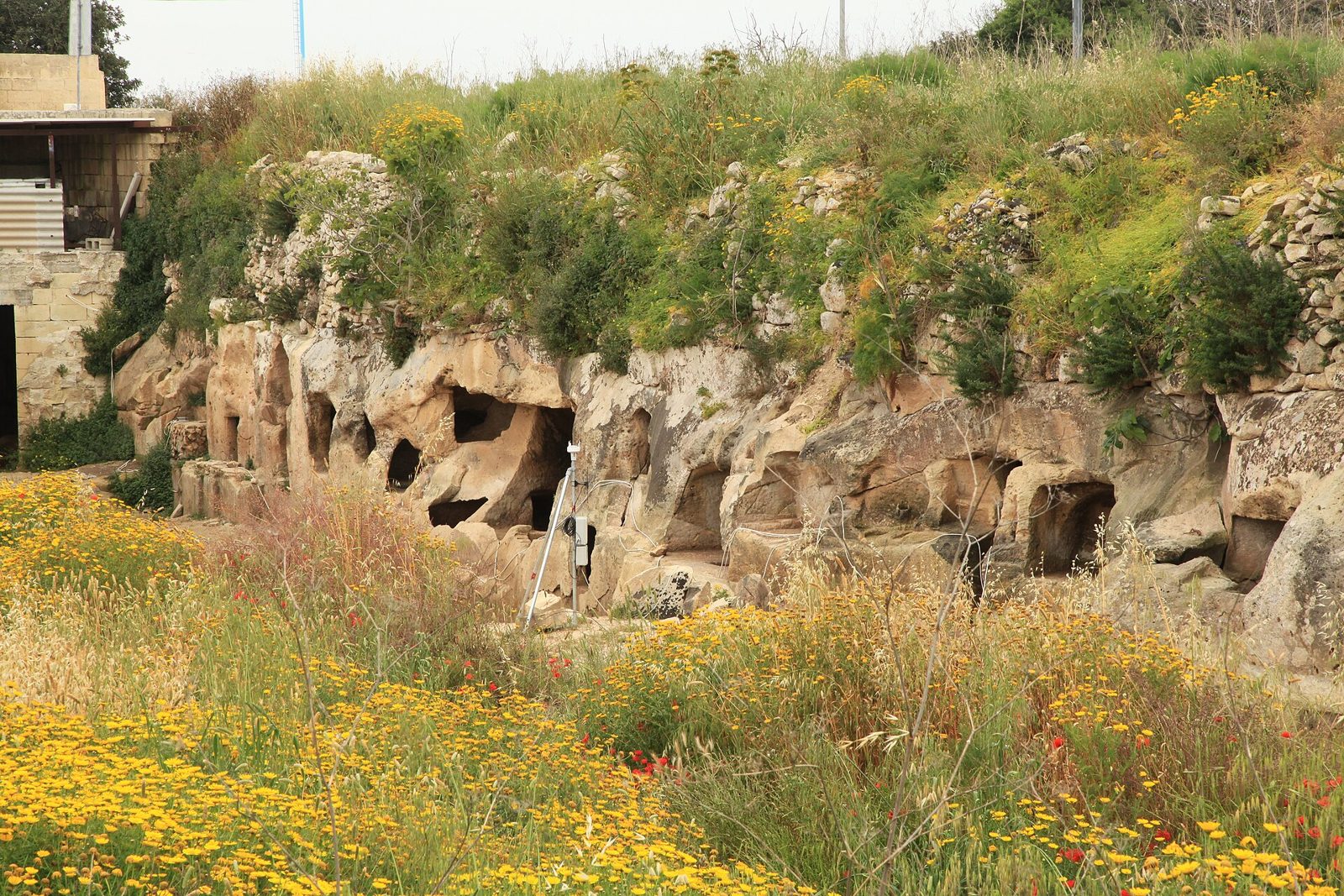
Inside the protective shelter, walkways take you along and above the rock-cut chambers, so you look down into the tombs rather than crawling through narrow passages as you do in parts of Rabat. Heritage Malta states that all areas are fully accessible to visitors with mobility impairments, which is rare for a Maltese catacomb. Audio guides in Maltese and English cost €1 and let you go at your own pace. Allow around an hour and a half, including time in the farmhouse visitor centre.
Ta' Bistra works well as part of a half day in Mosta. The Rotunda of Mosta, with one of the largest unsupported church domes in Europe and the story of the wartime bomb that pierced it without exploding, is about a kilometre away in a straight line. Fort Mosta, a British-era fort on the Victoria Lines, and Tarġa Battery are also close by. If you are building a catacombs day, Rabat is a short drive west: compare the big, busy St Paul's Catacombs in the morning with the quiet of Ta' Bistra in the afternoon. See our Rotunda of Mosta guide, the Mosta town guide and our guide to Malta's catacombs to plan the day.
Practical Information
OPENING DAYS
Last Sunday of each month (special opening, 1 March 2025 to 31 January 2027)
HOURS
10:00 to 16:00 on open days, per recent Heritage Malta listings
ADULTS (18+)
€5
SENIORS (60+), STUDENTS, CONCESSIONS
€3.50
CHILDREN (6 TO 11)
€2.50
HERITAGE MALTA MEMBERS AND PASS HOLDERS
Free
TICKETS
Bought at the door on the day
TIME NEEDED
About 1.5 hours
AUDIO GUIDE
Maltese and English, €1
ACCESSIBILITY
All areas step-free; accessible toilets
FACILITIES
Visitor centre, child-friendly zone, nappy changing, gift shop, ample parking
ADDRESS
Triq il-Missjunarji Maltin, Mosta
Opening days and times at Ta' Bistra change more often than at Malta's daily-opening sites, and some older guides still list weekday hours that no longer apply. Confirm the next open day on Heritage Malta's Ta' Bistra page before you travel. Information checked: 26 October 2026.
Getting There
By bus
Mosta is a hub on Malta's bus network, with direct services from Valletta. The nearest stop to Ta' Bistra is about a five-minute walk from the entrance. Our getting around Malta guide explains tickets and the Tallinja card.
By car
The site has ample parking, which makes it easy to combine with Mdina, Rabat or the northern beaches on a hire-car day.
From the UK
KM Malta Airlines flies direct from London Heathrow and London Gatwick to Malta International Airport in about three hours. See our flights to Malta guide.
Nearby and Worth Combining
- Rotunda of Mosta, about 1.1 km away: the great domed parish church at the heart of Mosta.
- Fort Mosta, about 1.2 km away: a British-era fort on the Victoria Lines.
- Tarġa Battery, about 600 metres away: an artillery battery on the boundary between St Paul's Bay and Mosta.
- St Paul's Catacombs in Rabat: Malta's largest catacomb complex, open daily.
- Ħal Saflieni Hypogeum: the prehistoric underground burial site excavated by Sir Themistocles Zammit.
- National Museum of Archaeology in Valletta, for the wider story of ancient Malta.
Distances are straight-line from the catacombs.
Ta' Bistra Catacombs: Frequently Asked Questions
When is Ta' Bistra Catacombs open?
Ta' Bistra is not open daily. Heritage Malta currently opens the catacombs to the public on the last Sunday of each month, under a special opening programme running from 1 March 2025 to 31 January 2027. Recent Heritage Malta listings give hours of 10:00 to 16:00. Older guides that list Tuesday, Thursday and Saturday openings are out of date, so check heritagemalta.mt before you travel.
How much are tickets for Ta' Bistra Catacombs?
Adults (18 and over) pay €5. Seniors aged 60 and over, students and concession holders pay €3.50, and children aged 6 to 11 pay €2.50. Heritage Malta members and Heritage Malta Passport holders go in free. On the monthly open days, tickets are bought at the door on the day.
How old are the Ta' Bistra Catacombs?
Most sources date the main use of the catacombs to around the 4th century AD, in the late Roman period, which makes them roughly 1,700 years old. Some earlier studies suggest burials began as early as the 1st century AD. The site was first recorded in the late 1800s and first investigated in 1933.
How big is Ta' Bistra?
The catacombs are commonly described as about 90 metres long, with 57 tombs set out across 16 chambers cut into the local globigerina limestone. Heritage Malta describes them as the largest set of tombs and catacombs found outside the ancient city of Melite, today's Mdina and Rabat.
Where are the Ta' Bistra Catacombs?
Ta' Bistra is on the northern edge of Mosta, in the centre-north of Malta. Heritage Malta gives the address as Triq il-Missjunarji Maltin, Mosta. Historically the site sat halfway between the Roman city of Melite and the harbour of Salina. The nearest bus stop is about a five-minute walk away.
Is Ta' Bistra wheelchair accessible?
Yes. Heritage Malta states that all areas of Ta' Bistra are fully accessible to persons with mobility impairments, and the site has fully accessible toilets. Walkways under the protective shelter let visitors view the tombs without going down narrow stairs, which sets it apart from many other catacombs in Malta.
How long do you need at Ta' Bistra?
Heritage Malta suggests around an hour and a half. That gives you time to walk the catacombs under the shelter with an audio guide and to look around the farmhouse visitor centre. If you are combining it with the Rotunda of Mosta, allow a half day.
Is Ta' Bistra good for children?
It is one of the more family-friendly heritage sites in Malta. There is a child-friendly zone, nappy changing facilities and ample parking, and because you view the tombs from walkways rather than tight tunnels, younger children tend to find it less daunting than the Rabat catacombs. Children aged 6 to 11 pay €2.50.
Can you book a guided tour of Ta' Bistra?
Heritage Malta offers guided tours on request through the contact form on its Ta' Bistra page. On open days, audio guides in Maltese and English are available for €1, which is the easiest way to explore at your own pace.
How does Ta' Bistra compare with St Paul's Catacombs in Rabat?
St Paul's Catacombs in Rabat is far larger and open daily, with narrow underground passages and a much busier atmosphere. Ta' Bistra is smaller, quieter and rural, opens only on set days, and is easier to get around thanks to its walkways and step-free access. Both show the same early Christian burial traditions, including agape tables, so many visitors enjoy seeing one after the other.
Sources: Heritage Malta, Heritage Malta monthly opening, Mosta Local Council.
FLY DIRECT FROM LONDON
Plan a Malta Holiday Around Its Hidden History
KM Malta Airlines flies direct to Malta from London Heathrow and London Gatwick in about three hours, and Mosta is around 20 minutes by road from the airport. Time your trip for the last Sunday of the month to see Ta' Bistra. VisitMalta.co.uk packages are ATOL-protected.
Search Malta Holiday Packages