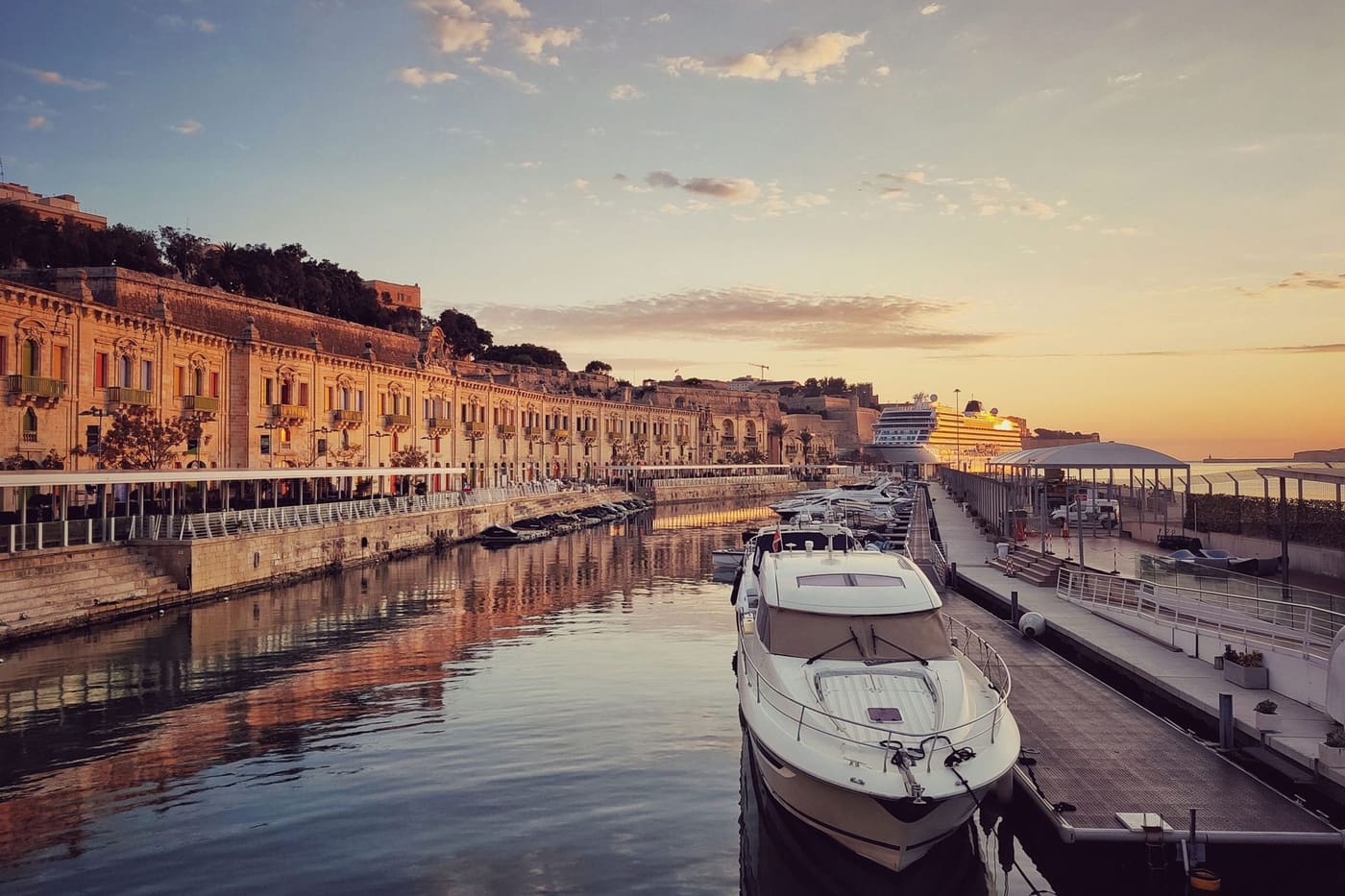
Attractions at the Valletta Waterfront, Floriana
The Valletta Waterfront has four heritage attractions within a short stroll of each other: the Pinto Stores, the Chapel of the Flight to Egypt by the Holy Family, the Historic Quay Wall and the Child Migrants' Memorial. Together they tell the story of Grand Harbour trade, baroque Malta and a poignant chapter of twentieth-century emigration, and you can see them all in under an hour.
Written from Valletta Waterfront's own published information. Last checked .
The four waterfront attractions
Pinto Stores
Built 1752, Grade I national monument, Floriana
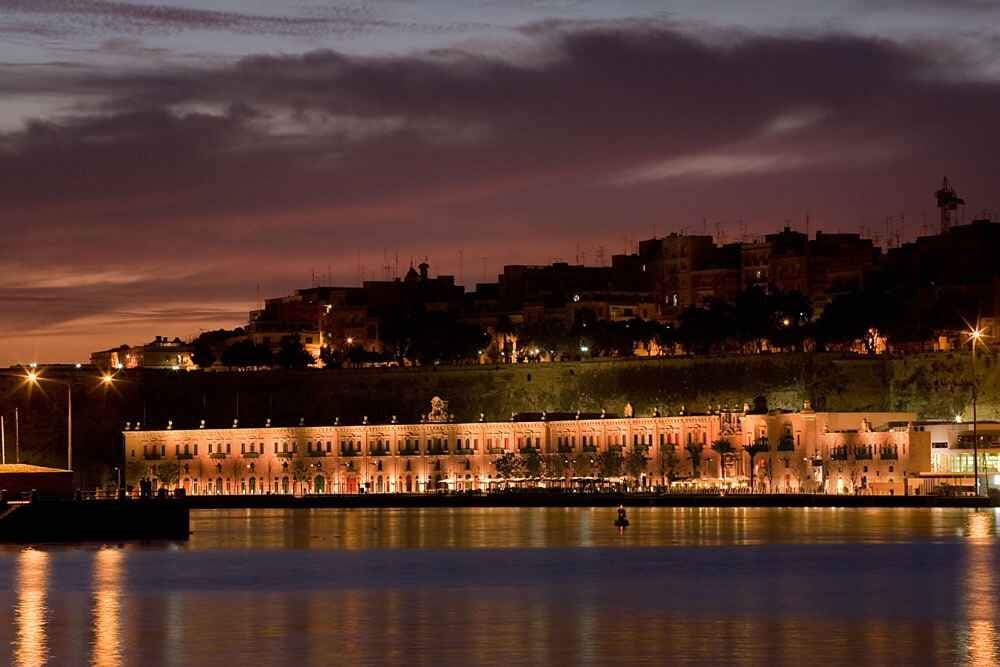
The long baroque row of warehouses that gives the Valletta Waterfront its character, built in 1752 for Grand Master Pinto.
These are the iconic buildings of the waterfront, commissioned by Grand Master Pinto and designed by Andrea Belli. They were created at the height of the baroque movement to give Grand Harbour trade a further boost, and they are still known by the name of the man who ordered them.
Above the portal of the middle warehouse, a large bronze bust of the Grand Master was placed. When it was unveiled on the evening of 10 August 1752, the whole wharf was lit with torches and a water carnival was held in that part of the harbour, complete with an orchestra on a barge. It is easy to picture the scene when you stand on the quay at dusk.
The stores were included on the Antiquities List of 1925 and are a Grade I national monument. They are also listed on the National Inventory of the Cultural Property of the Maltese Islands, so what you are looking at is one of the nation's protected treasures.
Chapel of the Flight to Egypt by the Holy Family
Built 1752, reopened 2006, the only chapel in Malta of its dedication
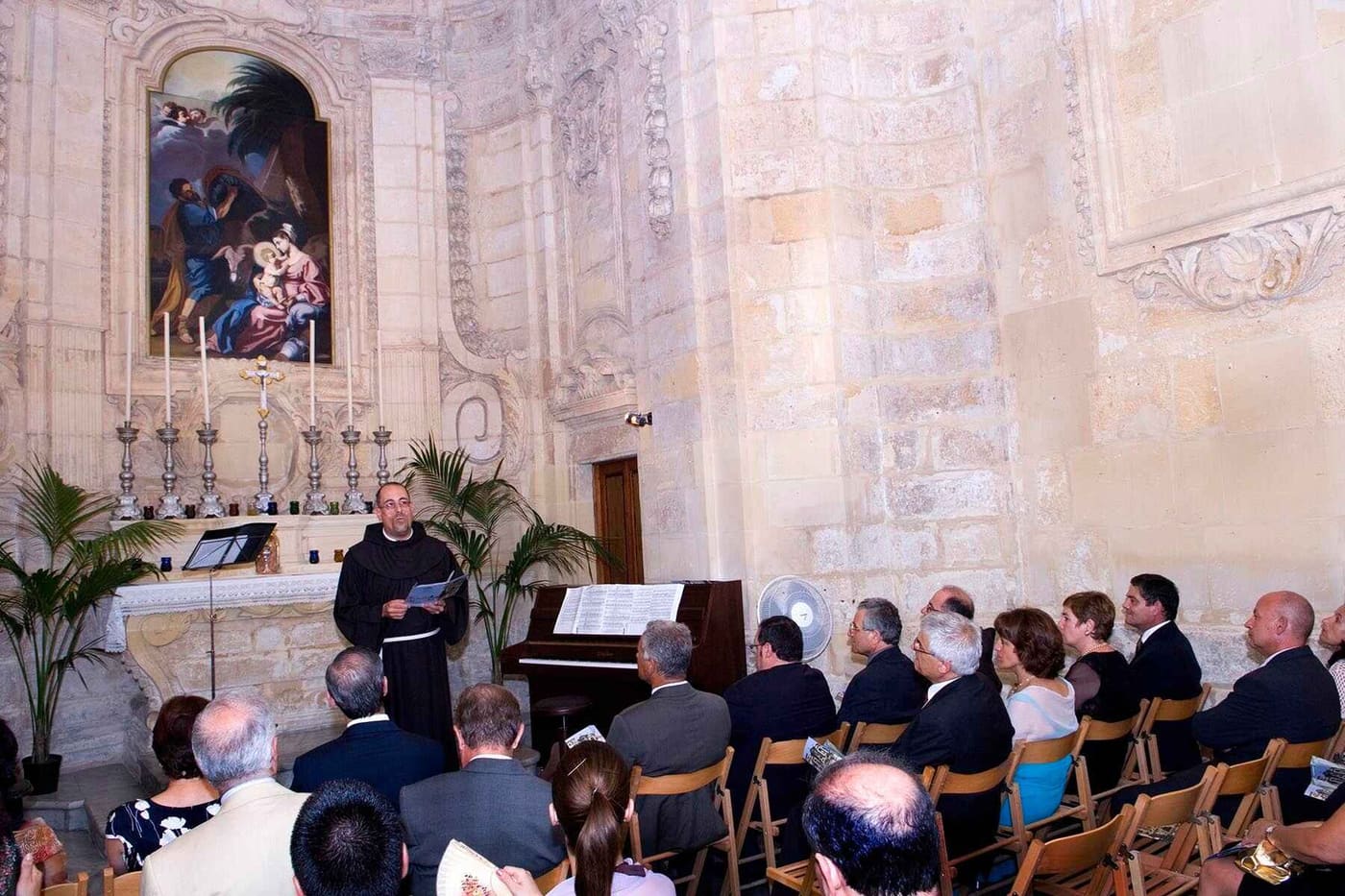
A small baroque chapel built in 1752 with the stores, and the only one in Malta dedicated to the Flight into Egypt.
Called Il-Kappella tal-Ħarba lejn l-Eġittu in Maltese, the chapel was built at the same time as the stores, to a baroque design by Andrea Belli. Its original purpose was to provide spiritual service for the workers at the Pinto Stores, so it is as much a part of the harbour's working history as the warehouses themselves.
In 1941 the chapel was hit by aerial bombardment. The damaged parts were later rebuilt faithfully in the spirit of the original, and the surviving remains were restored. It reopened for church services in 2006, alongside the Valletta Waterfront.
The painting above the high altar shows the Holy Family on their journey into Egypt. Mary, holding the infant Jesus, rests beneath a palm tree, while Joseph leads his donkey towards some shade and angels watch over them. The walls inside are richly decorated with sculpture, making this a lovely small example of baroque architecture.
Historic Quay Wall
Floriana, part of the 2006 award-winning restoration
The rebuilt stone quay where the Knights of St John and European merchants once unloaded their goods.
The quay wall is the working edge of the waterfront, the place where cargo met the land. It is where the Knights of St John and European merchants used to unload their wares, and it now forms part of a continuous promenade with shops, restaurants and leisure activities.
The wall was rebuilt as part of the wider restoration, which also rehabilitated the Grade 1 listed Pinto Stores of 1752 and the Forni Stores of 1626 and 1720. That project won the European Union Prize for Cultural Heritage, the Europa Nostra Awards, in 2006, described as Europe's top honour in the heritage field.
It is easy to walk past without a second thought, but the quay is the reason everything else is here. Pause for a moment, look down at the stone and imagine the barrels, sacks and crates that once crossed it.
Child Migrants' Memorial
Inaugurated 2008, marina near Customs House
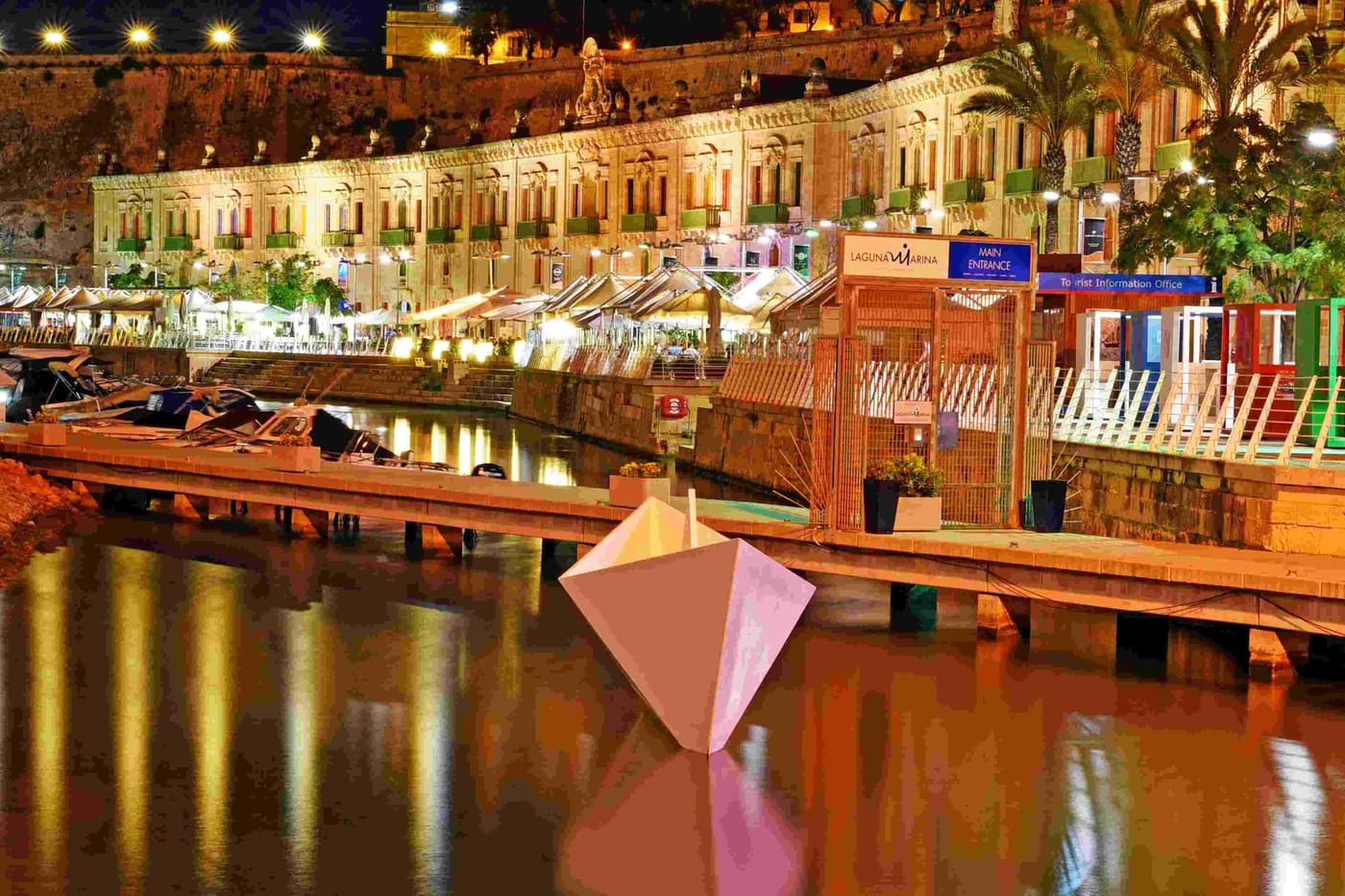
A paper boat monument unveiled in 2008 to remember 310 Maltese children who sailed to Australia between 1950 and 1965.
Inaugurated in 2008, the memorial commemorates the 310 Maltese children, mostly boys, who travelled to Australia in search of a better life between 1950 and 1965. It stands near Customs House, the very place from which the children began their life-changing voyage.
The monument takes the form of a paper boat and was designed by architects Rune Jacobson and David Drago. The simple shape speaks of childhood and fragile journeys, and it is deliberately open to interpretation, which makes it accessible to almost anyone, whatever their age or background.
Many British families have their own links with child migration schemes of that era, so this is a place that may resonate. Take a quiet moment here before moving on to the restaurants nearby.
The waterfront in the story of Grand Harbour
Grand Harbour has been the beating heart of Malta for centuries, and the stretch of quay below Floriana and Valletta was once among its busiest corners. When the Knights of St John made the harbour their base, ships needed somewhere safe to unload grain, wine, timber and every other cargo that kept an island fortress alive. Warehouses lined the water so that goods could pass straight from boat to store with as little fuss as possible.
Two periods of building still shape what you see today. The Forni Stores date from 1626 and 1720, while the long, elegant row known as the Pinto Stores was added in 1752 under Grand Master Pinto, at the height of the baroque movement and with the aim of boosting harbour activity still further. For a British visitor, it helps to think of this as Malta's equivalent of a grand dockside warehouse district, only built from honey-coloured limestone and with a baroque flourish rather than industrial brick.
The story did not stay peaceful. The chapel beside the stores was struck during aerial bombardment in 1941, part of the wartime ordeal that Malta endured and that British families still remember. Decades later, a major restoration brought the buildings, the quay and the chapel back to life. That project won the European Union Prize for Cultural Heritage, known as the Europa Nostra Awards, from the European Commission in 2006, a rare honour for what is now a place to stroll, dine and watch the ships go by.
Today the old stores are home to restaurants, bars and shops, and cruise ships berth just beside them. It is one of the few places in Malta where living history and everyday leisure sit so comfortably together. If you want to know what else the waterfront offers, the main Valletta Waterfront guide is the best place to start.
A short self-guided walk along the quay
You can cover all four attractions in well under an hour, even with plenty of stops for photographs. The walk is flat and follows a continuous promenade, so it suits families, older travellers and anyone who prefers an unhurried pace. Wear sun protection in summer, as there is little natural shade on the open quay, and a light layer in winter when the harbour breeze picks up.
Begin at the start of the promenade and take a moment to look along the full length of the Pinto Stores. The facade is long, regular and calm, with the central portal marking the middle warehouse. Walk slowly along it and notice how the doorways repeat in a steady rhythm. This is the heart of the waterfront and the best place to appreciate the scale of the baroque design.
Next, find the Chapel of the Flight to Egypt by the Holy Family, which stands among the stores. If it is open when you pass, step inside to see the altar painting and the sculpted interior. Then turn to the water and follow the Historic Quay Wall, the stone edge where merchants and Knights once unloaded their cargoes. Look at the masonry at your feet and then across the harbour to the opposite shore.
Finish at the marina end, close to Customs House, where a pink paper boat stands as the Child Migrants' Memorial. Sit nearby for a while. It is a quiet, thoughtful place to end, and from here it is only a few steps to a table. Our guide to restaurants and bars at the waterfront will help you choose somewhere for a drink or a meal afterwards.
Where to take your best photographs
The waterfront is one of the most photogenic corners of Malta, and you do not need a professional camera to do it justice. The softest light arrives early in the morning and again towards sunset, when the limestone glows a deep gold and the water turns glassy. In summer, both come with fewer crowds than midday.
For a wide shot of the whole terrace, stand back along the quay and aim along the length of the stores so that the repeating doorways draw the eye into the distance. After dark, the long facade is lit and reflects beautifully in the harbour, so bring a steady hand or rest your phone on a railing for sharper night shots. The reflections are at their best on calm evenings.
For something more personal, try the Child Migrants' Memorial. The paper boat shape makes a striking foreground against the lights of the stores, and a low angle with the water behind it works especially well. Inside the chapel, ask quietly before photographing and avoid flash, as it is a place of worship. And if a cruise ship is alongside, use it for scale: the contrast between a modern liner and the 1750s warehouses is a favourite among visitors.
Combining the waterfront with Valletta and the Three Cities
The waterfront sits just below the capital, so it fits neatly into a wider day out. A good pattern is to spend the morning in Valletta, taking in St John's Co-Cathedral and the views from the Upper Barrakka Gardens, then drop down to the quay for lunch and the heritage walk in the afternoon. Our Valletta guide has plenty more ideas for filling the day.
Across Grand Harbour lie the Three Cities, the old fortified towns that were home to the Knights before Valletta was built. From the waterfront you can see their bastions in the distance, which makes the quay a lovely place to get your bearings before you cross over. Read our Three Cities guide if you would like to extend your day with a visit to the other side of the water.
If you are arriving by ship, the waterfront is practically on your doorstep, and our page on the cruise port explains how it all connects. Wherever you are staying, the page on getting to the waterfront covers the simplest routes. It is also worth checking events and venues to see what else might be happening during your visit.
Location
Questions about Attractions at the Valletta Waterfront, Floriana
What are the main attractions at the Valletta Waterfront?
There are four heritage attractions: the Pinto Stores, the Chapel of the Flight to Egypt by the Holy Family, the Historic Quay Wall and the Child Migrants' Memorial. All sit close together on the promenade in Floriana.
How long does it take to see all four attractions?
The attractions are close together on a flat promenade, so you can see all four in well under an hour, even with stops for photographs. Allow longer if you plan to sit down for a drink or a meal.
When were the Pinto Stores built and who commissioned them?
The Pinto Stores were built in 1752 on the orders of Grand Master Pinto, to a design by Andrea Belli. They were created at the height of the baroque movement to boost activity in Grand Harbour.
What is special about the Chapel of the Flight to Egypt?
It is the only chapel in Malta dedicated to the Flight into Egypt. Built in 1752 for the Pinto Stores workers, it was bombed in 1941, rebuilt and reopened for services in 2006.
What does the Child Migrants' Memorial commemorate?
It commemorates the 310 Maltese children, mostly boys, who travelled to Australia between 1950 and 1965 in search of a better life. The paper boat monument was inaugurated in 2008 near Customs House.
Did the waterfront win any heritage awards?
Yes. The restoration project, which rehabilitated the Pinto and Forni Stores and rebuilt the quay wall, won the European Union Prize for Cultural Heritage, the Europa Nostra Awards, from the European Commission in 2006.
When is the best time to photograph the waterfront?
Early morning and the hour around sunset give the softest light and the warmest glow on the limestone. After dark the lit facade reflects in the harbour, which makes for atmospheric evening photographs.
Can I combine the waterfront with Valletta and the Three Cities?
Easily. The waterfront sits just below Valletta, so you can visit the capital in the morning and walk the quay later. The Three Cities are visible across Grand Harbour, making it simple to plan a longer day.
Photos: Valletta Waterfront and Valletta Cruise Port.